“SEEING IS BELIEVING.” Or, rather, that’s what we used to say. Since the beginning of time, seeing a fact or a piece of news depicted in an image was far more compelling than reading it, let alone hearing about it from someone else. This power of visual content probably stemmed from its immediacy. Looking at a picture takes less effort and training than reading text, or even listening to words. Then, the advent of photography brought an additional flavor of undisputable objectivity. Thanks to photography, pictures could be used as a reliable recording of events. However, dealing with deepfakes has added another layer to this narrative.
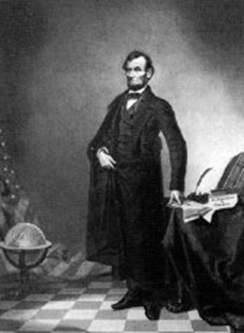
Looking closer, however, it turns out that photographs have been faked since shortly after their invention. One of the most famous examples of historical hoaxes, dating back to the late 1860s, is Abraham Lincoln’s head spliced over John Calhoun’s body, and cleverly so. (Note: Click here to read the full hoax description on hoaxes.org.)
Politics was indeed an important driver for image manipulation throughout the years, as witnessed by many fake pictures created to serve leaders of democracies and tyrannies. We have photos of the Italian dictator, Benito Mussolini, proudly sitting on a horse that was held by an ostler (the latter promptly erased), photos of Joseph Stalin where some subjects were removed after they fell in disgrace, and so on. All these pictures were “fake”, in the sense that they were not an accurate representation of what they purported to show.
Of course, creating hoaxes with good, old-fashioned analog pictures was not something everyone could do. It took proper tools, training, and lots of time. Then, digital photography arrived, which was soon followed by digital image manipulation software and, a few years later, digital image sharing platforms. With advanced image editing solutions available at affordable prices—or even for free—there was a boom in the possibilities of creating fake pictures. Of course, you still needed suitable training and time to obtain professional results. But this was nothing compared to working with film.
In the last couple of years, we have witnessed a revolution in the manipulation of images: “deepfakes”. Dealing with deepfakes has become an important challenge to address. A deepfake is a fake image or video generated with the aid of a deep artificial neural network. It may involve changing a person’s face with someone else’s face (so-called “face-swaps”), changing what a subject is saying (“lip-sync” fakes), or even changing the words and movements of someone’s head so that they are like a puppet, or guided actor (“re-enactment”). But how is this achieved? What are these “deep artificial neural Networks”? How can we fight deepfakes?
In this article, published in the Evidence Technology Magazine, we’ll try to address these questions and bring some order to all of this.